Reinventing school.
The bell system was borrowed from the industrial revolution. We kept the subjects and the standards, and replaced the bell, the single textbook and the letter grade with galleries, docents and rubrics.
What the museum school is
A school whose textbook is a museum. A lesson starts in a gallery, a docent walks the student through it, and the student answers with a claim and the evidence for it. Two banners hang at the door: STEM, for science, technology, engineering and mathematics, and Thinking, for people and the places of the world.
- The galleries teach. Every gallery makes a claim and shows its evidence. The lesson is the walk through it.
- The docents guide. Each hall has a figure from the record who asks the questions and points at what to look at twice.
- The work is scored on rubrics that change with grade and subject. No letter grades. We use agentic scoring first, and certified teachers review problem areas that might be uncovered barriers to your student’s making progress. We’re focused on improving authentic skills, not grading on a curve.
School as it has been, and the museum school
| What is compared | School as it has been | The museum school |
|---|---|---|
| 1. Continuity of learning methods | What works for a student stays with one teacher. At the next class, or the next year, the method starts over. | Every docent leaves short instructional notes. The next one reads them and uses them to customize its approach to your student. |
| 2. Flexibility with the student, and more choice | Bells ring for the end of class, to provide the pre-programmed lesson for the whole class in 47 minutes. | Kids don’t learn only in 47 minutes. A class can be one student or 1,000, and the student has more choice. |
| 3. Options matched to the student | One lesson, one project and one test for everyone in the room. | Our teachers try to match options for learning, projects and assessments with the student’s profile and interests. |
| 4. The textbook | A chapter to read, and questions at the end of it. | The galleries are the textbook. Every gallery makes a claim and shows its evidence. The lesson is the walk through it. |
| 5. How the work is scored | Letter grades, often set against the rest of the class. | Rubrics that change with grade and subject. No letter grades. We’re focused on improving authentic skills, not grading on a curve. |
| 6. When the teacher is stretched | A sick day, other school duties, or 30 students in five sections, and the lesson is lost. | No lost days. A docent can handle a class of one, or of 1,000, and certified teachers review problems arising from the classroom. |
| 7. Games | A reward for finishing early, or time off from the lesson. | A strategy built into the learning and the assessment. |
What we discard
Five illustrations of a school day that does not work. They are invented composites, not real classrooms or real people.
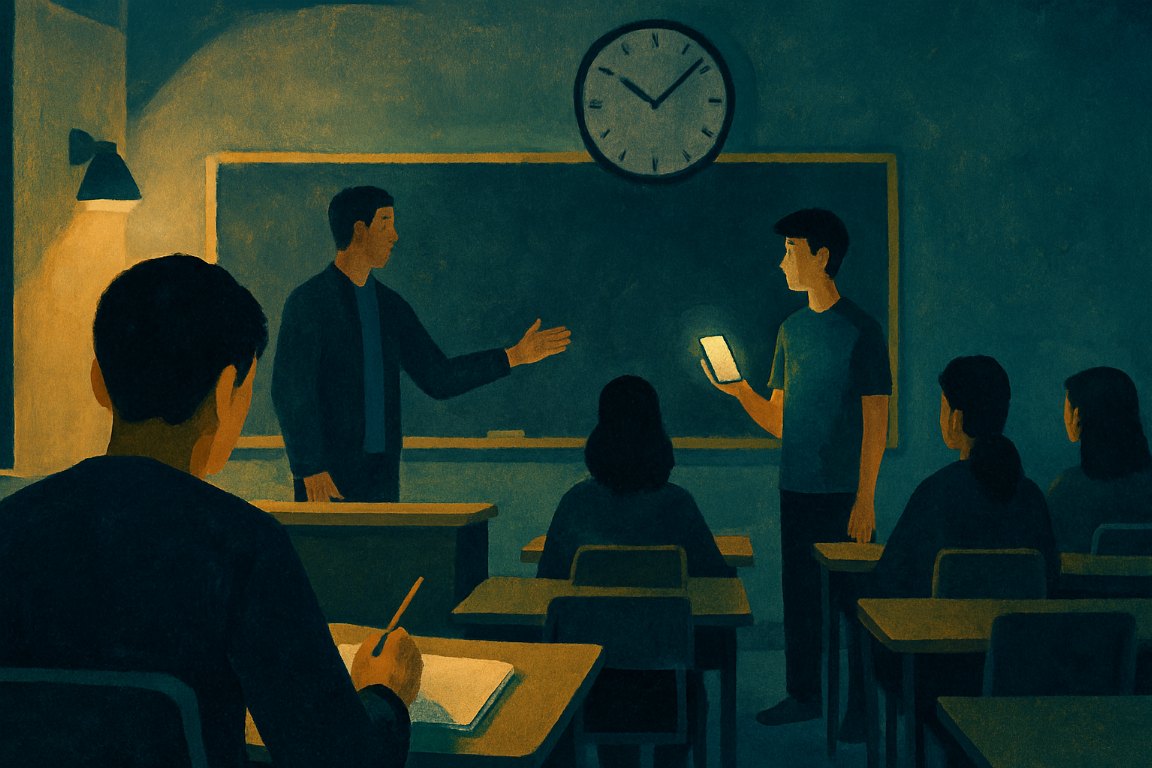
Ten minutes for one phone
A ninth-grade algebra class opens with a standoff over a phone. Two more interruptions follow. By the bell, less than half the period went to algebra, and the student who came ready to work got the same half as everyone else.

Last year’s slides
A teacher with three courses to prepare pulls last year’s slides the night before. The lecture runs long, the questions never come, and the class copies notes on a treaty that no one was asked to think about.
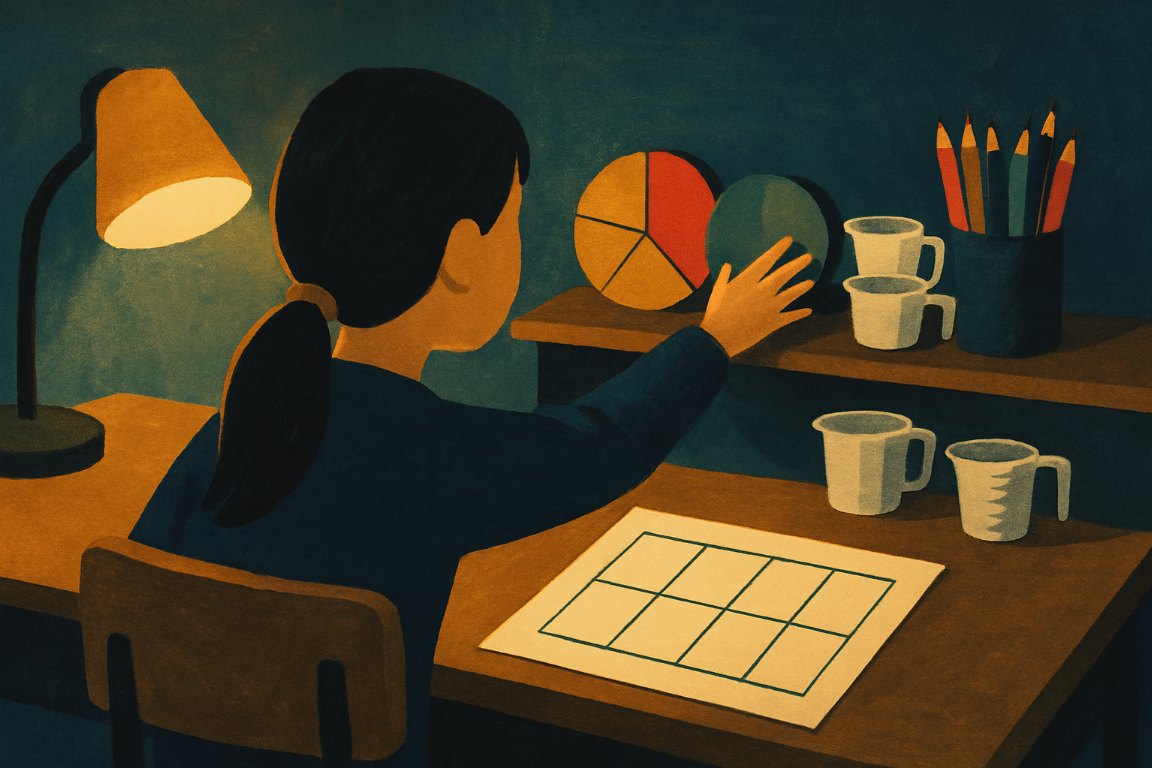
One way in
A fifth grader understands fractions when she can handle them and draw them. She gets them as a worksheet, and is marked behind. The lesson had one way in, and it was not hers.
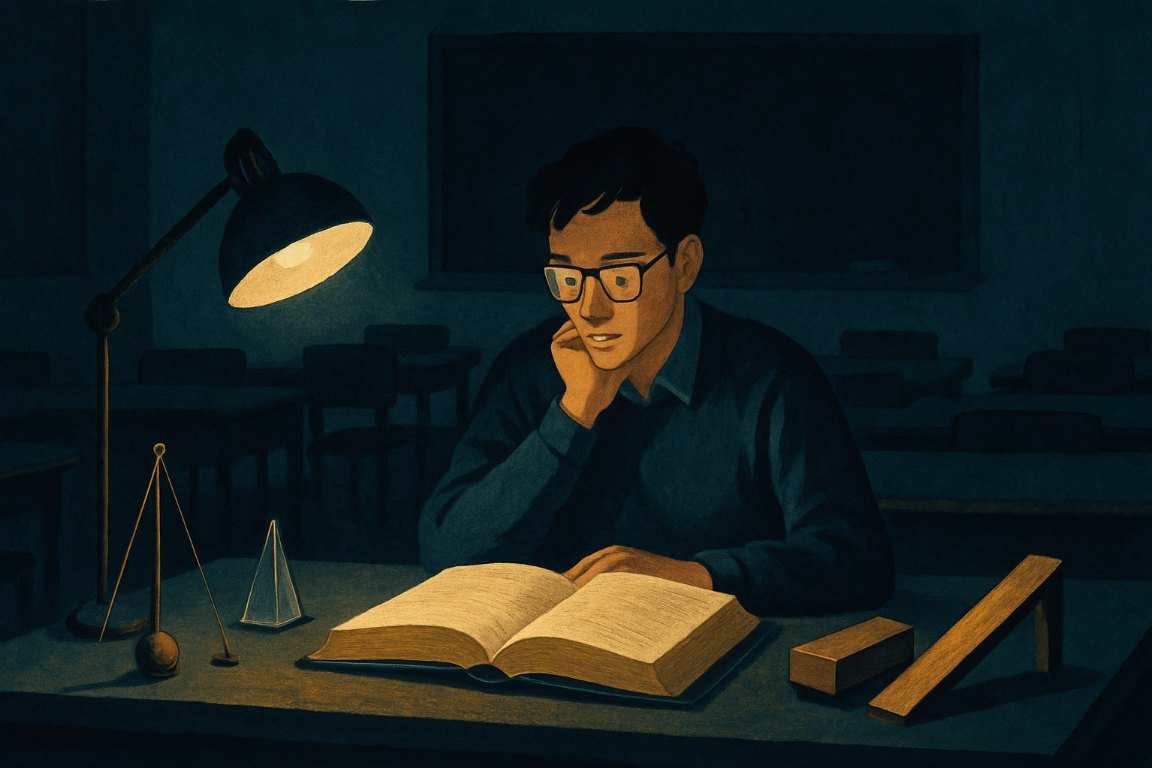
One chapter ahead
A school short a physics teacher gives the course to a first-year teacher certified in biology. He stays one chapter ahead of the class all year. The students can tell.
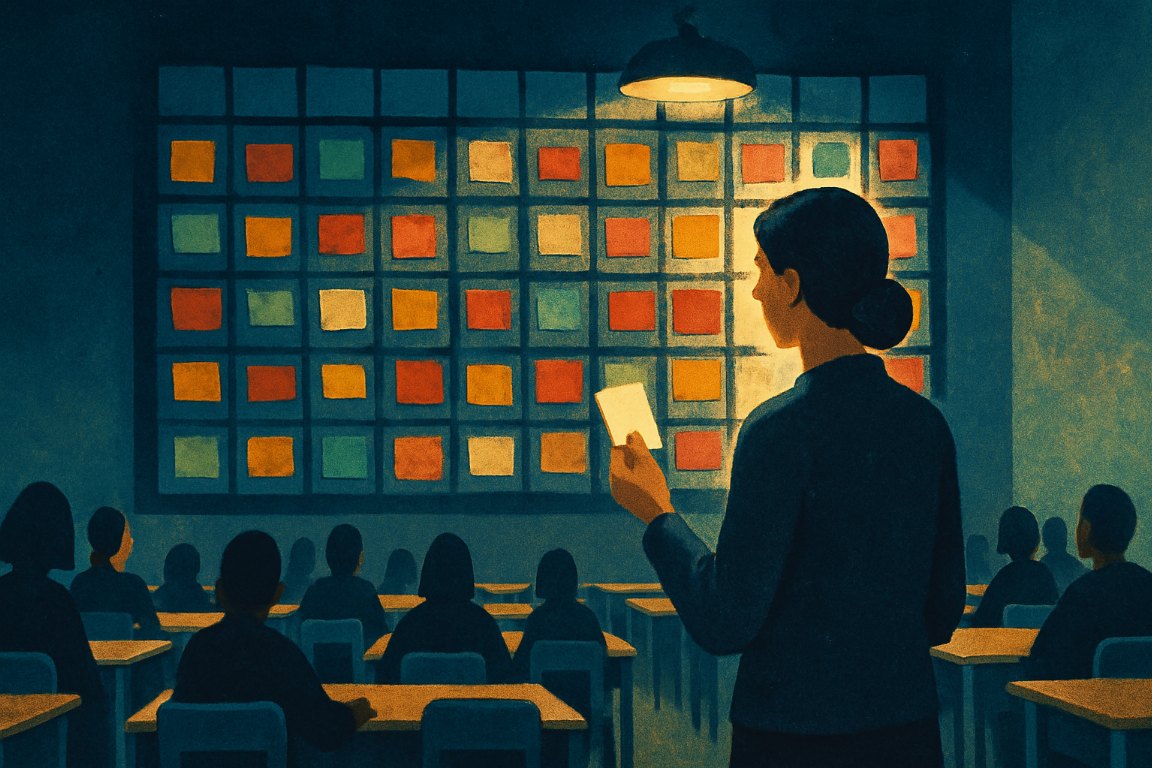
No day left on the calendar
A strong teacher has 34 students, a pacing calendar set by the district, two weeks of testing and an assembly on Thursday. She knows which students need another day on the unit. The calendar does not have one.
How a lesson runs
A school whose textbook is a museum. A lesson starts in a gallery, a docent walks the student through it, and the student answers with a claim and the evidence for it.
- The galleries teach.Every gallery makes a claim and shows its evidence. The lesson is the walk through it.
- The docents guide.Each hall has a figure from the record who asks the questions and points at what to look at twice.
- The work is scored on rubrics.They change with grade and subject. We use agentic scoring first, and certified teachers review problem areas that might be uncovered barriers to your student’s making progress.
The teaching strategy: docents
A docent here is a unique bot, programmed to both the museum program and your child.
- Notes pass from one docent to the next.Every docent leaves short instructional notes. The next bot reads them and uses them to customize its approach to your student.
- No lost days.Gone are teachers who are sick, distracted by other school duties, or struggling to stay on top of 30 students in five sections. Certified teachers review problems arising from the classroom.
- A class of one, or of 1,000.Our bots can handle either. It makes no difference.
- Trained for today’s learners.Our bots have trained under LLMs and the latest pedagogy: not for yesteryear, but for today’s learners.